Product Description
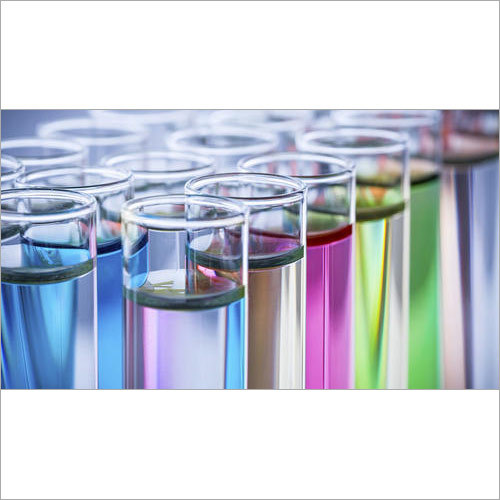
Solvent Chemicals for Paint Industry is used to formulate epoxy, alkyd, inorganic and PU coatings of various specifications. These chemical based solvents are effective in strengthening mechanical attributes and in fortifying film building characteristics of paints and coatings. These solvents are also effective in improving characteristics of hydrocarbon based solvents, paints and coating products. Standard of solvent chemicals has been checked on the basis of its storage life, composition, possible toxin content, chemical stability and temperature range. These chemicals can be availed at reasonable rate from us.
Specification:
|
Antimony
|
0.4403 ppm
|
|
Selenium
|
Less than 1 ppm
|
|
Purity
|
96.00%
|
|
Ph
|
09/05/10
|
|
PA
|
Red
|
|
Mercury
|
Less than 1 ppm
|
|
Lead
|
0.04
|
|
LOD
|
1.00%
|
|
Insoluble in water
|
0.50%
|
|
Chromium
|
0.1193 ppm
|
|
Chloride content
|
0.30%
|
|
Cadmium
|
0.060 ppm
|
|
Ash content
|
20.00%
|
Key Features of Solvent ChemicalsThese solvent chemicals offer high purity levels (96.00%) and stable performance under recommended storage conditions. Their compatibility with most resins and binders makes them suitable for various paint formulations, ensuring efficient blending and superior application results. The physical state is liquid, and their density is approximately 0.88 g/cm3, ideal for industrial processes.
Storage and Safety PrecautionsGiven their classification as Class 3 flammable liquids, solvents should be stored in cool, dry, and well-ventilated areas away from ignition sources. Packaging options include barrels, drums, and tankers, with a shelf life of 24 months when stored correctly. Proper handling reduces the risk associated with high VOC content and flash points ranging from -20C to 25C.
Applications in Paint ManufacturingThese solvent chemicals play a crucial role in the paint industry, serving as essential ingredients for manufacturing, thinning, and cleaning. Their miscibility with organic solvents ensures smooth formulation, while the presence of various components like acetone and toluene enhances final paint quality and performance for both industrial and commercial uses.
FAQs of Solvent Chemicals for Paint Industry:
Q: How are solvent chemicals used in the paint industry?
A: Solvent chemicals are blended with resins and pigments to manufacture paints, facilitate thinning for application, and clean equipment and tools. Their high miscibility with organic components ensures uniform distribution in paint formulations.
Q: What are the benefits of using these solvent chemicals in paint production?
A: These solvents improve the consistency and overall performance of paints, support efficient blending, and speed up drying times. They also enable effective cleaning of paint tools and surfaces, contributing to high-quality paint results.
Q: When should solvent chemicals be added during the paint manufacturing process?
A: Solvents are typically introduced during the early mixing stages of paint production to dissolve resins and pigments. They can also be used during batch adjustments or formulation changes as required.
Q: Where should solvent chemicals be stored to ensure safety and stability?
A: Solvents should be stored in cool, dry, and well-ventilated areas, far from ignition sources. Adequate storage in barrels, drums, or tankers as per industry guidelines maintains chemical stability and minimizes safety risks.
Q: What is the process for handling and using solvent chemicals safely?
A: Proper handling involves using PPE, ensuring adequate ventilation, and following industry-specific safety protocols. Always avoid open flames or heat sources, and handle packaging with care to prevent spills and exposure.
Q: How do solvent chemicals impact paint properties and quality?
A: Solvent chemicals directly influence viscosity, drying time, and adhesion of paints, leading to improved application, smoother finishes, and enhanced durability, provided the correct solvent type and proportion are used.




 Send Inquiry



 Send Inquiry
 Send Inquiry
 Send SMS
 English
 Spanish
 French
 German
 Italian
 Chinese (Simplified)
 Japanese
 Korean
 Arabic
 Portuguese